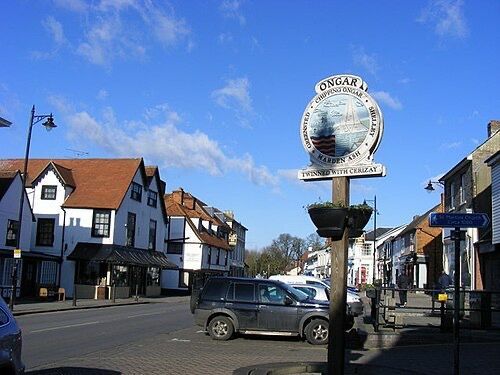
Waltham Abbey: Steeped in History, Community and Character
Waltham Abbey: Steeped in History, Community and Character
From its fascinating royal connections and medieval abbey to its thriving town centre and beautiful surrounding countryside, Waltham Abbey is a special corner of Essex with a story worth telling.
Situated in the south-west of Essex, close to the borders of Hertfordshire and Greater London, Waltham Abbey is a town that manages to combine a fascinating past with the everyday character of a modern community.
Whether you're visiting for the first time, have lived here all your life or simply know the area through its familiar streets and landmarks, there's plenty to discover.
And for those who enjoy a soundtrack to everyday life, Forest Radio is proud to broadcast to Waltham Abbey, bringing together the music, memories and information that help keep local communities connected.
With an organisation that has been based in Essex since 1976, Forest Radio understands the importance of local identity, familiar voices and being part of the communities it serves.

A little history: From Saxon settlement to royal connections
Waltham Abbey's history stretches back more than a thousand years, and much revolves around one magnificent landmark:
Waltham Abbey Church.
The settlement originally developed beside the River Lea, with its location providing a natural attraction for early settlers. Its name is thought to derive from the Old English words for a forest homestead.
The town's religious history is particularly fascinating.
According to tradition, during the reign of King Cnut in the early 11th century, a nobleman named Tovi the Proud brought a miraculous Holy Cross to Waltham. The cross became an important object of pilgrimage, attracting visitors who believed it possessed healing powers.
The church was subsequently rebuilt and developed by Harold Godwinson, the man who would become King Harold II, the last Anglo-Saxon king of England.
In 1066, shortly before leaving to face William the Conqueror at the Battle of Hastings, Harold is said to have prayed at Waltham. He is also traditionally believed to have been buried at the church following his death, although the precise location of his grave is a matter of historical debate.
The religious establishment grew considerably over the following centuries. In 1177, Henry II refounded it as an Augustinian priory, and in 1184 it became an abbey, developing into one of the country's most important religious foundations.
Waltham Abbey's fortunes changed dramatically during the reign of Henry VIII.
In 1540, it became the last monastic house in England to surrender to the Crown during the
Dissolution of the Monasteries.
Much of the original abbey was demolished, but the church's nave survived and continues to serve the local community today.
Visitors can still see remnants of the medieval complex, including the impressive 14th-century gatehouse and bridge.
The Abbey Church remains the town's most recognisable historic landmark and an enduring reminder of Waltham Abbey's extraordinary past.

A market town with centuries of tradition
Waltham Abbey isn't simply a place with an impressive church. It has also been an important market town for hundreds of years. Today, there are regular markets bringing life and activity to the town centre.
The historic streets, traditional buildings and familiar local shops help retain the character of an English market town, even as Waltham Abbey has grown and changed.
The town also developed an important industrial identity. One particularly significant part of its history was the Royal Gunpowder Mills, where explosives were manufactured from the 17th century onwards.
The site later became an important centre for research and experimentation before closing its manufacturing operations in 1991. Today, it forms part of the area's industrial heritage and visitor attractions.
During the 19th century, horticulture and glasshouse production also became important local industries, supplying fruit and vegetables to the expanding London market.
The arrival of the railway and improvements in road transport helped the town grow as a residential community, a role it continues to fulfil today.

Waltham Abbey today: A town with plenty to offer
Waltham Abbey is very much a living, modern town. It sits within the Epping Forest district of Essex, close to the River Lea and the beautiful landscapes of Epping Forest and the Lee Valley.
Its location gives residents the benefit of a town environment while keeping attractive countryside and open spaces close at hand.
The town centre of Waltham Abbey retains much of its traditional market-town atmosphere.
The regular markets remain an important part of town life, offering residents an opportunity to shop locally, meet familiar faces and enjoy a little of the traditional market-town experience.
One of Waltham Abbey's great attractions is its access to nature.
Abbey Gardens provide a peaceful setting alongside the historic church and abbey remains. The nearby Cornmill Stream and surrounding green spaces offer opportunities to enjoy a walk and take in the town's quieter side.
The wider Lee Valley Regional Park provides even more opportunities for walking, cycling, wildlife watching and outdoor recreation. The Lee Valley White Water Centre, built for the London 2012 Olympic Games, is another major attraction within easy reach.
The town's historic buildings, local organisations, community groups and regular events all contribute to its identity.
From the Abbey Church and historic streets to the Royal Gunpowder Mills heritage site, there are plenty of reminders of the area's contribution to English history.
But perhaps the most important feature of Waltham Abbey is its community.
Like many towns, it relies on local organisations, volunteers, businesses and residents to keep things moving, support one another and maintain a strong sense of belonging.
That sense of community is just as important today as it was generations ago.

Forest Radio: Bringing music, memories and local information to Waltham Abbey
A town's identity isn't just about its buildings, landmarks or history. It's also about the people who live there, the things they enjoy and the information they need. That's where
Forest Radio
comes in.
Forest Radio has a distinctive musical identity, playing much-loved good time oldies. The station offers a musical journey across several generations.
It's music that brings back memories, creates connections and provides the perfect soundtrack to everyday life.
But Forest Radio is about more than great music.
Alongside its extensive musical offering, the station provides community information and health-related information, helping listeners stay informed about issues and services that matter to them.
Whether it's useful local information, community news, health awareness or simply a favourite song that brings back happy memories, Forest Radio aims to offer something valuable to its audience.
With its roots in Essex dating back to 1976, the organisation has a long-standing connection with the county and an appreciation of what makes local communities special.
For Waltham Abbey residents, that combination of familiar music and relevant information is what makes Forest Radio different.
A town with a past, a present and a future
Waltham Abbey has had a remarkable journey, from early Saxon beginnings and royal religious connections to its development as a medieval market town and its growth into the modern community we know today.
Its history is visible in its buildings and streets, while its character lives on through its residents, local businesses, markets and community organisations.
It's a town that values its past while continuing to look forward.
As Waltham Abbey moves into the future, Forest Radio is delighted to be part of the wider community it serves.
Because whether it's a good time oldie, a useful piece of health information or something happening in the local area, there's always a good reason to tune in.
Forest Radio – great music, useful information and a connection to your community.